While researching my family history, I came across something I did not expect to find.
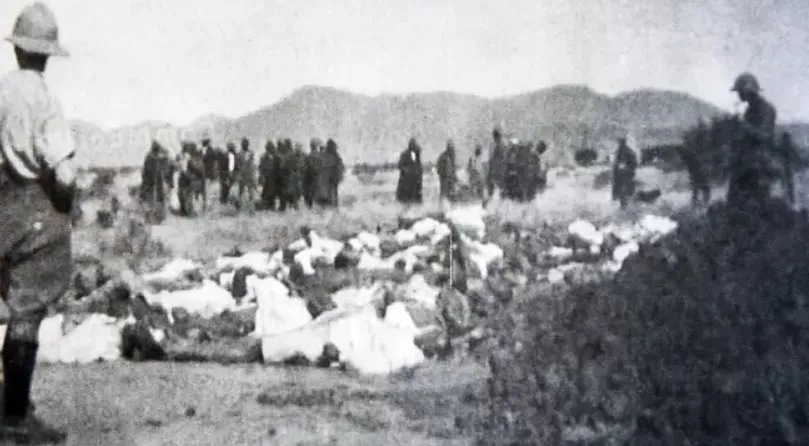
What began as a search for my ancestors, tracing surnames, oral histories, and scattered archival references, slowly led me toward one of the darkest moments in South African history: the Bulhoek Massacre of 1921.
In the middle of that research, I found a recorded list of people who were taken to hospital after the massacre and later died from their injuries. Seeing the names written down like that affected me more than I expected. These were no longer just numbers in a history book or vague references in colonial records — they were people, families, sons, fathers, brothers.
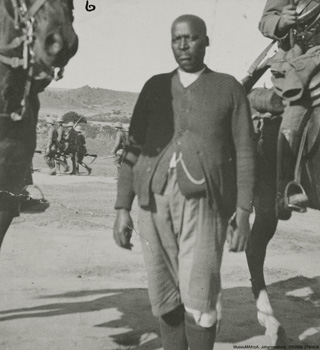
What made this discovery deeply personal for me is that among these names, and beyond them, is the memory of my own great-grandfather, Halile Jonas Qwabi, whose death was never formally recorded in the surviving list, but whose story has been preserved through oral history passed down by my grandfather. That alone reminded me how incomplete official records can be, and how much family memory still carries the truth that archives sometimes miss.
As I read through the list, one thing stood out immediately: so many of them were young men.
Some were in their late teens. Some were in their twenties. Even those in their thirties and forties still feel painfully young when placed in the context of lives cut short by state violence. The list reads like an interrupted generation.
The recorded names
- Halile Jonas Qwabi (approx. 35)
- Samuel Pakade (36)
- Stanford Pakade (18)
- Meschack Dondolo (51)
- Veli Komana (40)
- Samuel Komana (36)
- Edmund Magadla (40)
- Solomon Magadla (36)
- James Mafinja (36)
- Borington Mgijima (50)
- Henry Mgijima (28)
- Abel Mgijima (23)
- Gaven Mgijima (19)
- Edward Mpateni (45)
- Isaac Mpateni (36)
- Thomas Charles Mgulwa (36)
- Joseph Mgulwa (36)
- Robert Mgulwa (19)
- Philip Mhlabana (44)
- Yiti Sokabo (27)
- Eliyah Sokabo (19)
- Samuel Lulu (30)
- Richard Matshoba (26)
- Edwin Lulu (36)
- Elliot Matshoba (20)
- Barnabas Poswa (33)
- Alfred Poswa (36)
- Edward Luso (36)
- Wilson Mgijima (son of Enoch Mgijima) (19)
- Edwin Mgijima (22)
- Felix Mgijima (30)
- Alfred Sobantu Mgijima (14)
- Simon Mjileni (38)
- Josie Xayiya (24)
- Hebert Xayiya (18)
- Julius Matshoba (30)
- Reuben Mgijima (20)
- Richard Mgijima (26)
- Samuel Nkopo (21)
- Charlton Nkopo (28)
- Ely Mgijima (30)
- Meschack Lutu (36)
- Albert Lutu (18)
Looking at these names, I cannot help but wonder what happened after the gunfire, after the burials, after the mourning.
Was there ever any real reconciliation for Bulhoek?
Was there ever any acknowledgment, apology, or reparations for the families who lost their loved ones?
Or were these men simply absorbed into the silence that so often surrounds colonial violence in South African history?
The massacre itself is remembered, but I sometimes feel the people are not remembered enough. Lists like this matter because they restore something history often strips away: individual humanity.
A name.
An age.
A family line.
A story.
For me, this post is part family history, part memorial, and part question to the present. If descendants of any of these families ever come across this post, I hope these names help preserve memory in some small way.
Sometimes genealogy takes you beyond births, marriages, and surnames.
Sometimes it leads you to grief that still echoes across generations.
And sometimes, the best thing you can do is write the names down and make sure they are seen.
— Ayabonga Qwabi
Source
Civil registration (marriages, deaths), Queenstown (Cape Province), 1873–1970 — FamilySearch catalog record, pages 227–232 (Family History Library).