Written by Ayabonga · Ifafa elide lakwa Qithi · “Umthi omde wokuvelela izinto”
For NomavaTV
Thembu lineage and history
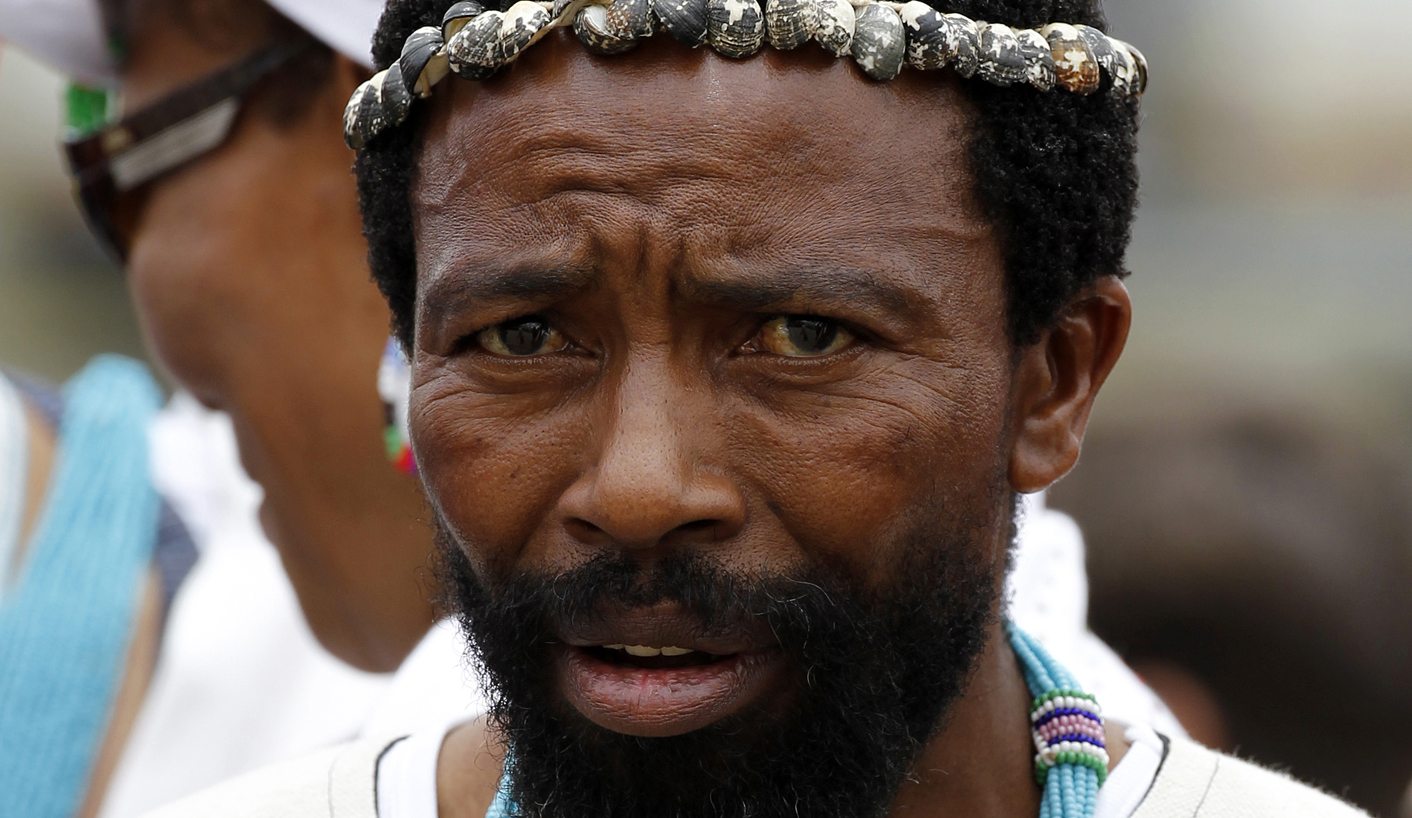
The Thembu people, known as AbaThembu or |Xam bu !e people, possess a rich and complex history that traces back to a lineage of influential leaders. This lineage not only shaped their cultural identity but also their territorial claims in what is now South Africa.
The Thembu are believed to be an assimilated people, a blend of the Khwena Bushmen and Embo people.
From their emergence as a significant political force in the 16th century, the Thembu have maintained a rich cultural heritage through generations of unique leaders.
Highlights
- Starting with Zwide, the Thembu established themselves as influential leaders who would shape the cultural and political landscape of their region.
- Through Njanya's descendants in 1307, the Thembu formed important connections with other major groups, including the amaXesibe, amaMpondo and amaMpondomise.
- During the colonial period, leaders like Ngubengcuka (1810–1830) showed great diplomatic skills in unifying clans against external pressures.
- The current king, Buyelekhaya Dalindyebo, continues this legacy while adapting to modern challenges.
Moments
- A fascinating power struggle emerged when Dlomo, supported by his brother Ndungwana, seized power despite their father's wishes for another heir.
- During apartheid, King Sabata Dalindyebo earned the title “Comrade King” for his stance against oppressive policies.
The Thembu are primarily located in Komani (formerly Queenstown), which the Khwena people call Qomani, reflecting their connection to the Khomani Khwena Bushmen.
Early ancestry
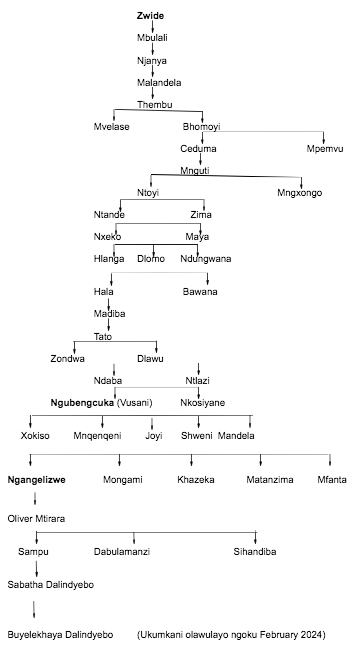
Zwide
Zwide is recognized as the foundational figure of Thembu lineage. His leadership established the groundwork for the cultural and political structures that would define future generations. Zwide's influence is pivotal in understanding the origins of Thembu identity, marking the beginning of a long-standing legacy.
Sibiside (Mbulali)
Sibiside, also referred to as Mbulali, was instrumental in consolidating power within early Thembu society. His reign was characterized by strategic maneuvering to navigate internal clan dynamics, setting a precedent for future leaders.
Njanya (1307)
Njanya is notable for fathering several descendants who would significantly impact Thembu history. His lineage included key figures who played critical roles in shaping the socio-political landscape of the region.
Sons of Njanya
- Malandela
- Malangela
- Mpondo (founder of the amaMpondo)
- Mpondomise (founder of the amaMpondomise)
- Xesibe
Malandela
The lineage of Malandela solidified the seniority of the Thembu over other clans, reinforcing their cultural identity and territorial claims.
Sons of Malandela
- Thembu (eponymous ancestor)
- Gcina
Thembu
As the namesake of the nation, Thembu defined the identity and territorial boundaries of his people, becoming a cornerstone of Thembu heritage. He died in Lesotho.
Sons of Thembu
- Ndilo
- Mvelase
Ndilo and Mvelase
These two figures ensured continuity within the lineage, maintaining Thembu influence amid external pressures. Ndilo is the father of the Eastern Cape Thembu people; Mvelase is the father of the KZN Thembu people.
Generational continuity
From Ndilo emerged Ntongakazi (Dunakazi) — leadership with distinct contributions to Thembu governance, further enriching the lineage's legacy.
From Ntongakazi came Bhomoyi, whose leadership was crucial during a time of external pressures.
From Bhomoyi came Cedume, who exemplified resilience and adaptability within Thembu society.
From Cedume came Zima and Ntande. The period under Zima and Ntande reflects significant transformation within the lineage. Zima was regent for Ntande; when the time came for Ntande to rule, Zima did not want to leave the throne. Ntande faked illness to lure Zima into ebuhlathi and slew him and his men with spears.
Under Ntande’s time is the first recorded iron made by Thembu people.
From Ntande came Mqithi, Mnguthi, Maya, and Mcube.
Mnguthi led modern-day Thembu people from Herschel, near Lesotho, to modern-day Ngcobo. He assimilated AmaBomvana and AmaQwathi into the Thembu nation.
It is said Mnguthi never died: at old age he entered the Mbashe river and never returned, creating what is known spiritually today as isiziba sama Dlomo — a powerful spiritual connection for the Dlomo clan. Even in death he served his people.
Mnguthi's sons
- Nxeko (lies buried at Msana in Dutywa, near Clarkebury)
- Sebeni (his grandson lost a war to Noni, making Noni chief of the Qwathi)
- Khazeka (known as a great fighter)
- Mgxongo (also known as Homestead people or Ntsundu)
Mnguthi's decision to appoint Nxeko as his heir influenced future leadership dynamics within the clan.
Settlements of Mnguthi's sons
- Mgxongo → Mgudu in Ngcobo
- Sebeni → Sigubudwini in Ngcobo / Mthatha
- Nxeko → Msana in Ngcobo / Dutywa
The struggle for succession (Nxeko’s sons)
Nxeko’s sons — Ndungwana, Hlanga, and Dlomo — navigated a complex power struggle. Despite Nxeko’s wishes for Hlanga to succeed him, Dlomo, supported by Ndungwana, usurped power — themes of ambition and familial rivalry that echo through the lineage.
Dlomo
Dlomo's reign marked consolidation and expansion within Thembu territories.
Dlomo is believed to have introduced fabricated ancestor names into Thembu genealogy (umnombo) — figures some say never existed, such as Yem Yem, Sopitsho and Ngqolomsila. Other sources hold these names may be of Khwena origin, with Yem Yem as Xam Xam in Khwena.
Dlomo is also believed to have slain his father during the war of 1680 with Nxeko.
From Dlomo came Hala, whose contributions to governance and culture warrant deeper study; two villages in Lady Frere bear his name.
From Hala came Madiba — an era noted for stability and cultural achievements.
From Madiba came Thato, who navigated complex political landscapes to ensure continuity within Thembu traditions.
From Thato came Zondwa, whose reign combined challenges and triumphs.
From Zondwa came Ndaba and Ntlanzi.
Ndaba and Ntlanzi
Ndaba’s alliance with Rharhabe significantly impacted leadership decisions; Ntlanzi’s contributions merit further historical investigation.
Ngubengcuka (Vusani) (1810–1830)
Ngubengcuka is celebrated for diplomatic acumen during transformative times. He succeeded Ndaba in 1810 and played a crucial role in unifying various clans against colonial encroachments.
From Ngubengcuka came Mthikrakra, whose leadership during the Mfecane wars exemplified strategic decisions vital for Thembu survival.
From Mthikrakra came Ngangelizwe, remembered for generosity and wisdom under colonial pressure.
From Ngangelizwe came Jongilizwe, whose brief reign consolidated authority amid increasing colonial influence.
From Jongilizwe came Sabata Dalindyebo — resistance against apartheid and advocacy for indigenous rights; he passed away in 1986.
From Sabata Dalindyebo came Buyelekhaya Dalindyebo, the current king, upholding Thembu traditions while addressing contemporary governance.
The lineage of the Thembu reflects resilience and adaptability across centuries. Each leader contributed uniquely to cultural heritage and political life — a tapestry that invites ongoing exploration.
Summary: the struggle for succession
- Nxeko had three sons: Ndungwana, Hlanga, and Dlomo.
- Nxeko intended Hlanga to inherit the throne.
- Dlomo usurped the throne with the help of Ndungwana.
The rise of Madiba and the house of Thembu
- Dlomo → Hala
- Hala → Madiba (ancestor of Nelson Mandela)
- Madiba → Thato
- Thato → Zondwa
- Zondwa → Ndaba and Ntlanzi
- Ndaba was nominated for kingship by Rharhabe (a Xhosa chief).
- Ndaba married Rharhabe's daughter.
- Ndaba was saved from exile by Rharhabe.
- Ndaba stole Rharhabe’s cattle.
- Rharhabe was killed under Ndaba’s command using his Qwathi army while trying to retrieve his cattle from Ndaba.
Thembu kingship in the 19th and 20th centuries
- Ndaba → Ngubengcuka
- Ngubengcuka → Mthikrakra — some believe Mthikrakra may have been adopted from the Mvulane clan; this remains unproven.
- Mthikrakra → Ngangelizwe
- Ngangelizwe → Jongilizwe
- Jongilizwe → Dalindyebo
- Dalindyebo → Sabata Dalindyebo (the “Comrade King”)
Controversies and politics of leadership
- Sabata Dalindyebo was suspected to have been murdered by his brother during the apartheid era.
- Kaiser Matanzima was not the rightful heir to the Thembu throne but was installed as Paramount Chief by the apartheid government to serve its political agenda.
Modern Thembu leadership
Sabata Dalindyebo → King Buyelekhaya Dalindyebo (present-day ruler).
King Buyelekhaya Dalindyebo continues to lead the amaThembu, navigating traditional and modern governance — including tensions between customary and statutory law, and public debates around his role and political activity.
Citations and further reading
- core.ac.uk — PDF
- Kalanga origins and Mandela — kalanga.org
- Wikipedia — Thembu people
- SA History — precolonial catalytic book (PDF)
- Rhodes University — Cory MS18534 (PDF)
- Unisa — OHASA repository (PDF)
- Wikipedia — Thembuland
- Simple Wikipedia — Thembu people
- SA History — Thembuland
- J. H. Soga — The South Eastern Bantu
- Mlungisi Ndima — A History of the Qwathi People from Earliest Times to 1910 (MA thesis, Rhodes University, December 1988)