
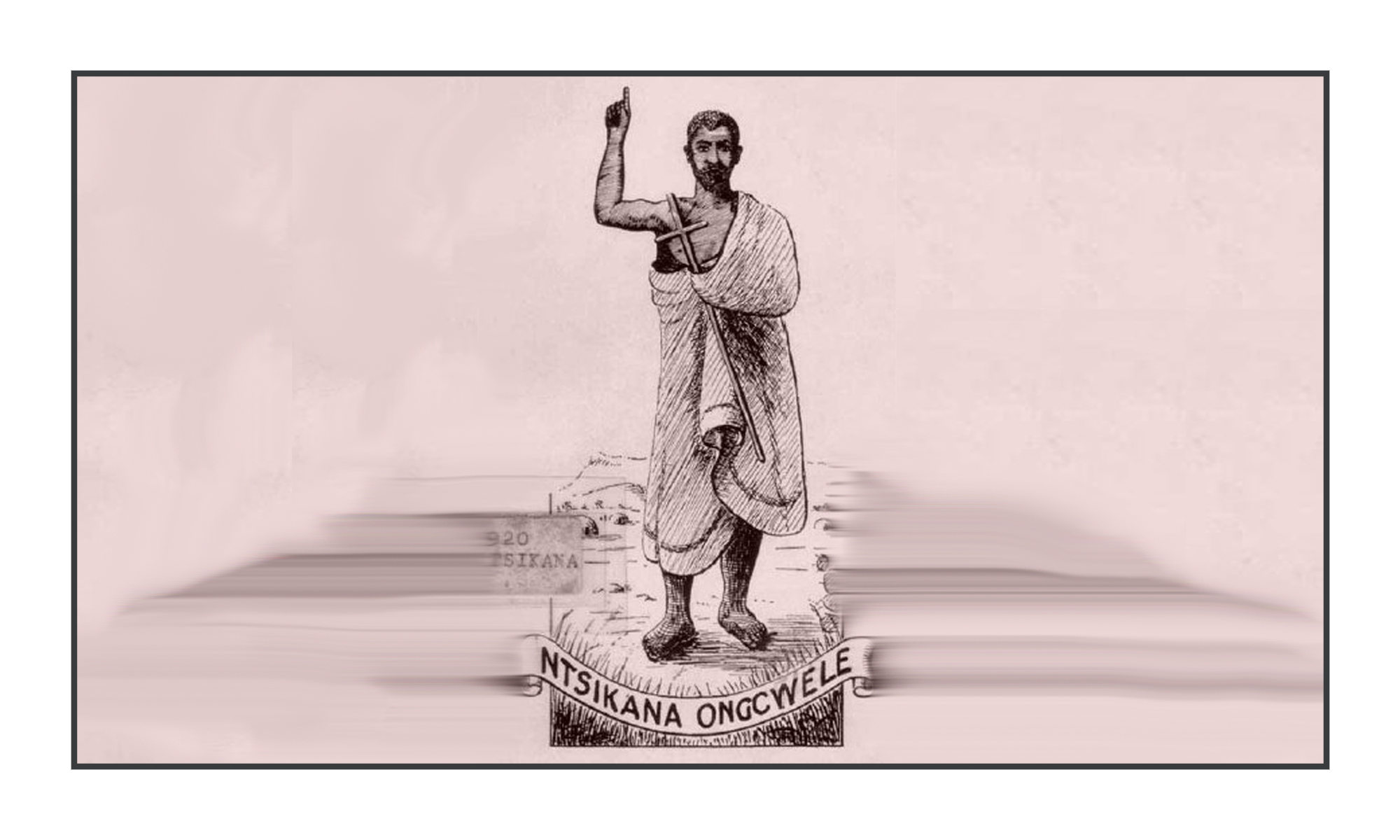
When the British came with their guns and their God, two Xhosa prophets rose to meet them. One said fight. The other said bow. One is remembered as a trouble-maker. The other is celebrated as a saint.
That “saint” was Ntsikana kaGaba (c.1780–1821). And in the cold light of history, he was the worst thing that ever happened to the Xhosa nation.
He did not pick up a spear. He did not organise resistance. Instead, he picked up the Bible and told our people to throw away what made us Xhosa (red ochre (imbola), cattle, ancestors, fighting spirit) and replace it with prayer, submission, and “unity like a ball of meat” (imbumba yamanyama).
He was the original psychological disarmament officer.
This piece is a decolonial reckoning with the man they called uNgcwele, the first great sell-out who traded ancestral power for a Bible and helped open the gates to colonisation. It reads the mission archive honestly: what it preserved, what it printed, and what that did to memory.
The historical wound that created him
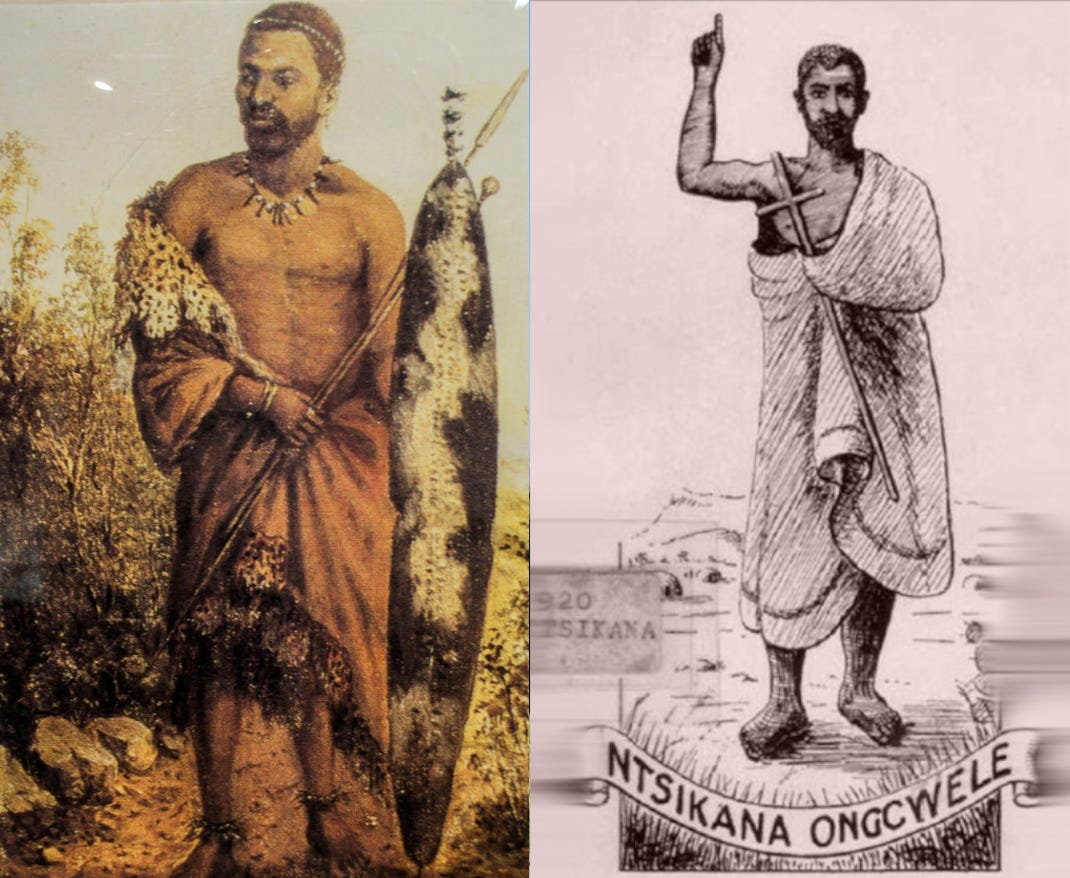
By the time Ntsikana “emerges” as a prophet around 1814 to 1815, Christianity was not new among amaXhosa.
As early as 1799, Johannes van der Kemp of the London Missionary Society had already entered Xhosa territory and preached at the Great Place of Ngqika.
This matters.
Because it destroys the myth that Ntsikana’s message came out of nowhere.
He did not discover Jesus in a vacuum.
He encountered a frontier already seeded with missionary ideology.
Van der Kemp’s own letters show that:
- Christianity was being actively introduced into Xhosa society
- Mission work was entangled with colonial administration
- British expansion into Xhosa territory was anticipated and discussed
In one early 19th-century report, missionary planning in the region is explicitly framed under the expectation of future British control.
So when Ntsikana later “prophesies” the coming of the white nation, we must ask:
Was this divine revelation, or elite knowledge already circulating among those close to power?
By 1815, amaXhosa had already been pushed, burned, and robbed in the Fourth Frontier War (1811–1812).
The British did not only want land: they wanted total war.
They torched gardens, destroyed kraals, slaughtered cattle, and drove people across the Fish River like animals.
Traditional leaders and diviners had no answer for the cannons.
Into that crisis stepped not one, but two responses:
- Nxele (Makhanda): the prophet of resistance
- Ntsikana: the prophet of alignment and adaptation
One mobilised war.
The other restructured belief.
The van der Kemp connection: where the story really begins
Any serious discussion of Ntsikana must begin not in 1814, but in 1799.
That is when Johannes van der Kemp enters Xhosa territory and begins preaching among the people of Ngqika.
This is not speculation. It is documented.
And it places Ntsikana in a very specific position:
Not as an isolated visionary,
but as a man formed in a zone of early missionary penetration.
Van der Kemp’s mission was never purely spiritual. His own correspondence shows:
- negotiation with colonial authorities
- anticipation of British expansion
- a project of “civilising” African societies
In that environment, ideas about:
- a single God
- rejection of ancestors
- moral reform
- submission to a higher (external) authority
were already being introduced.
Ntsikana’s later message mirrors these themes almost perfectly.
So the question becomes unavoidable:
Was Ntsikana resisting colonial influence, or internalising and redistributing it?
Ntsikana’s teachings: a masterclass in disinformation
Before we even read his teachings, we must be clear about something:
By the time Ntsikana begins preaching, the core elements of his message (one supreme God, rejection of ancestral mediation, moral discipline, and submission to a new order) are already present in missionary teaching introduced by van der Kemp and others.
What Ntsikana does is not invent something new.
He translates and localises it.
Read the primary sources. They are damning.
In D. D. T. Jabavu’s own 1952 book Imbumba yamaNyama (yes, the title is literally taken from Ntsikana’s words), we find teachings preserved along Lovedale missionary lines:
1. Rejection of imbola and ancestors
“Waßayala aßantu 6omzi wakhe ukußa 6angaqa6i imbola, 6angayi emdudweni, 6angaphimisi, esithi, ‘Ma bakhonze uThixo.’”
(He forbade the people of his household from using imbola, from going to dances, from practising witchcraft, saying “Let them serve God.”)
He washed the red clay off his own family and declared ancestral ways evil. In one stroke he cut the spiritual cord that connected the living to the dead, the foundation of Xhosa identity and power.
2. Spiritualising poverty: the “button without a mouth” prophecy
Ntsikana warned his people about the coming white nation:
“Luyeza uhlanga olumhlophe … siza sineqhoʃa elingenamlomo; ma ze ningalamkeli iqhoʃa, liya kukhukulisa uninzi … eyesiβini into aßaya kuza bathethe ngayo liliZwi likaThixo; ze nilamkele.”
(The white nation will come … it will have a button without a mouth; do not accept the button, it will sweep away the majority … the second thing they will speak about is the Word of God; accept that.)
Here iqhosha elingenamlomo is not a fashion metaphor about coats. In this saying the button images money: small round metal coins, the white nation’s tokens of wealth, useless in the old moral sense (a “button” that has no “mouth”, no living tie to how amaXhosa stored value in cattle, land, and kin). The warning is about accepting their coin and their economy, not about misty prophecy.
While this passage is often presented as prophetic genius, it reads very differently when you keep the referent on wealth.
Missionaries and colonial agents were already discussing:
- coin, currency, and debt as the new face of wealth
- tax, trade, and wages that broke the cattle economy
- land and labour as things to be priced and seized
- British political control over who would count as rich or ruined
So the “button without a mouth” is not mystical knowledge.
It is hard talk about money, dressed in a line everyone could repeat.
More importantly, his instruction is revealing:
Reject that coin (their wealth system), but accept the Word.
At the exact moment when colonial power was restructuring land, labour, and wealth, Ntsikana still splits the listener: turn your desire away from material survival and accumulation, turn it toward spiritual compliance.
That is not neutral theology.
That is ideological realignment under pressure.
While the British were busy stealing cattle (our wealth, our status, our link to the ancestors), Ntsikana told amaXhosa not to value material things. Focus on the Bible instead.
In other words: let them take your land and cattle, just do not lose your soul.
That is perfect colonial propaganda: disarm people spiritually so they will not fight when their material base is destroyed.
3. The “imbumba yamanyama” doctrine: unity as submission
Ntsikana’s most famous line, which Jabavu later made the title of an entire book: “Yimbumba yamanyama”: be united like a lump of scraped meat that cannot be separated.
Sounds beautiful, until you realise the unity he demanded was unity under the mission station, not unity against the invader. He told followers to join the Chumie mission and stay there. He handed future leadership strata into the hands of the very system dispossessing us.
4. The hymns that became weapons
His songs (Intsimbi kaNtsikana, UThixo omkhulu) were the first isiXhosa Christian compositions. They were printed, promoted, and weaponised by Lovedale Press. Jabavu proudly cites AmaCulo aseLovedale by J. K. Bokwe as a source.
These were not innocent worship songs. They were the soundtrack to surrender.
Nxele vs Ntsikana: the real battle for the Xhosa mind
The contrast between Nxele and Ntsikana is often framed as chaos versus civilisation.
That framing is dishonest.
This was not a clash between irrationality and reason.
It was a clash between two strategies under invasion:
- Nxele mobilised spiritual belief toward military resistance
- Ntsikana redirected spiritual belief toward moral compliance
Nxele’s prophecy failed on the battlefield.
Ntsikana’s message succeeded in the long term.
Not because it was more “true”,
but because it aligned more closely with the interests of a rising colonial order.
Nxele was called a charlatan and a warmonger by the missionaries.
Ntsikana was called “the first Xhosa Christian” and uNgcwele.
One died in exile on Robben Island after leading an army.
The other died peacefully in the arms of the mission and was turned into a saint.
Nxele attacked Grahamstown in 1819 with 10 000 warriors. Ntsikana stayed home and preached peace to Chief Ngqika, the British collaborator.
Guess which one the missionaries loved?
The missionaries did not only win the war on the battlefield: they won the war inside our heads. Ntsikana was their perfect Trojan Horse: a Xhosa man using Xhosa metaphors to sell Christianity as liberation when it was actually pacification.
The Lovedale disinformation machine
Lovedale did not just print Bibles. It printed the narrative.
- J. K. Bokwe wrote the first biography of Ntsikana.
- W. B. Rubusana included him in Zemk’inkomo Magwalandini (“Your cattle are being stolen, you cowards”; the irony is painful).
- D. D. T. Jabavu in 1952 still canonised him in Imbumba yamaNyama.
These were not neutral historians. They were the educated products of the very system Ntsikana helped birth: the “New African” elite who believed the path to freedom was through the white man’s school and church.
They turned a sell-out into a hero.
Why this still matters
Ntsikana did not only disillusion one generation. He created the template.
He taught us to:
- hate our own spiritual systems;
- spiritualise poverty instead of fighting for land;
- seek salvation in the next world instead of justice in this one;
- divide ourselves into amaqaba (“red people”) and amagqobhoka (the turned-inside-out ones).
That division still lives in us today.
Every time someone tells a young Xhosa person that ancestral ways are “backward”, that muthi is evil, that we must forgive and move on while our land is still stolen, that is Ntsikana’s voice speaking through the centuries.
He was not a prophet of progress.
He was the prophet of pacification.
The first great sell-out.
And the tragedy is: we still sing his hymns.
A closing provocation, grounded in the archive
There is no document where Johannes van der Kemp writes:
“Ntsikana is my agent.”
History is rarely that convenient.
What the archive does show, clearly, is this:
- Christianity was present among amaXhosa before Ntsikana’s prophetic phase
- Missionaries were already entangled with colonial expansion
- British arrival was expected, discussed, and prepared for
- Ntsikana’s teachings align closely with missionary objectives
From that, a more grounded conclusion emerges:
Ntsikana did not introduce a new spiritual system. He amplified one that had already arrived, and made it indigenous.
Whether that makes him a visionary, a mediator, or a collaborator is not a question the archive will settle for you.
But it is no longer a question you can avoid.
Was Ntsikana a sincere convert or a colonial asset? The archive will not give you a tidy answer, but the question is still worth asking out loud, especially among amaXhosa who are tired of hagiography dressed up as history.
History rarely offers pure villains or pure saints. It offers people under impossible pressure, and structures that reward certain stories with printing presses.
So the useful question is not only “Was Ntsikana sincere?” which the archive cannot fully settle but: whose security did his message increase first: his neighbours’, or a colonial order that was taking cattle, land, and futures?
If you are Xhosa, the sharper question may be even simpler: whose “unity” are we still being asked to perform and who profits when we confuse harmony with justice?
Stay awake, maXhosa. The battle for the mind did not end when the frontier war did.
Further reading (print sources named in this piece)
- D. D. T. Jabavu, Imbumba yamaNyama (1952)
- W. B. Rubusana, Zemk’inkomo Magwalandini (1911)
- J. K. Bokwe, Ibali likaNtsikana
- J. K. Bokwe, AmaCulo aseLovedale (hymn collection Jabavu cites)
- .T. van der Kemp and his Critique of the Settler Farmers on the South African Colonial Frontier (1799-1811)
For a different angle on Thembu moral philosophy and leadership ethics (not a substitute for this critique, but a companion conversation), see Ubuntu: The Living Philosophy of the Thembu People.